
Bringing Learning to Life in Early Years
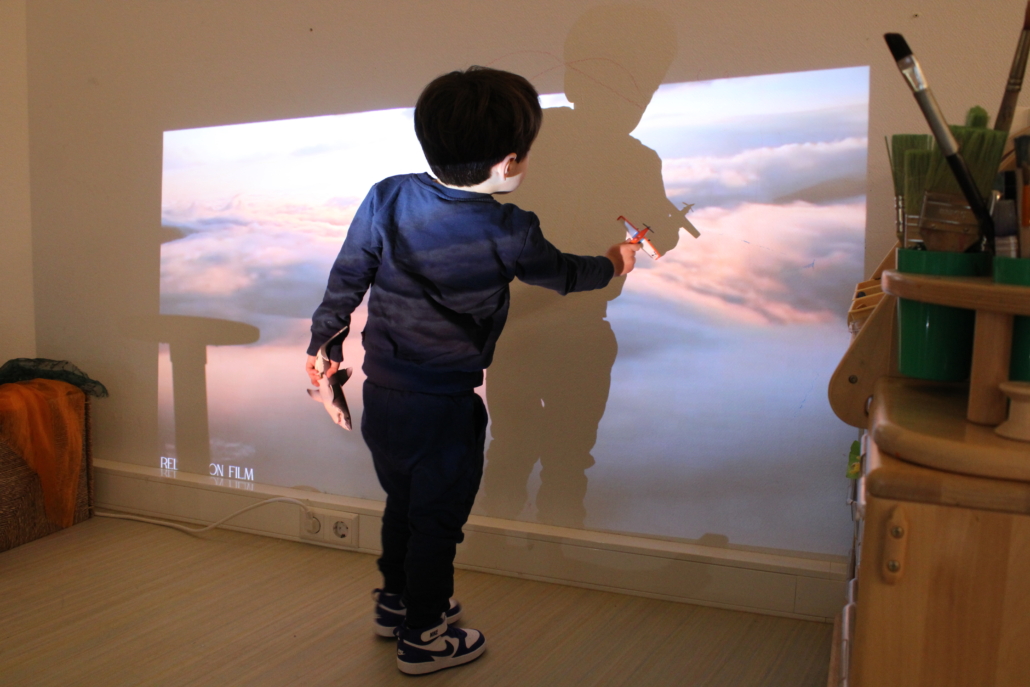
From digital backdrops that spark imagination to robots that encourage exploration, technology is used in a variety of ways in ISA’s Early Years classrooms. For our youngest learners, technology is used to help bring learning to life, enhance engagement and support the development of their creativity and communication skills.
However, technology is never the focus of learning itself. At this young age, students have a limited attention span, and using digital technology can be one strategy for providing more engagement for students.
“In the Early Years, because students are so young, we see digital tools as a support to learning, rather than a focus of learning,” explains Nursery teacher Elisa. “We encourage students to be active users of technological tools, as opposed to passive users.”
Tools such as a digital backdrop can provide more depth and inspiration for students. During a recent exploration of transportation, a digital backdrop helped students immerse themselves in the topic and extend their imaginative play.
In another activity, a webcam and projector gave students the opportunity to observe themselves while learning to describe their appearance, providing an extra, hands-on opportunity for them to practice their speech. This helped to support their language development and confidence, particularly for students who are learning English as an additional language.
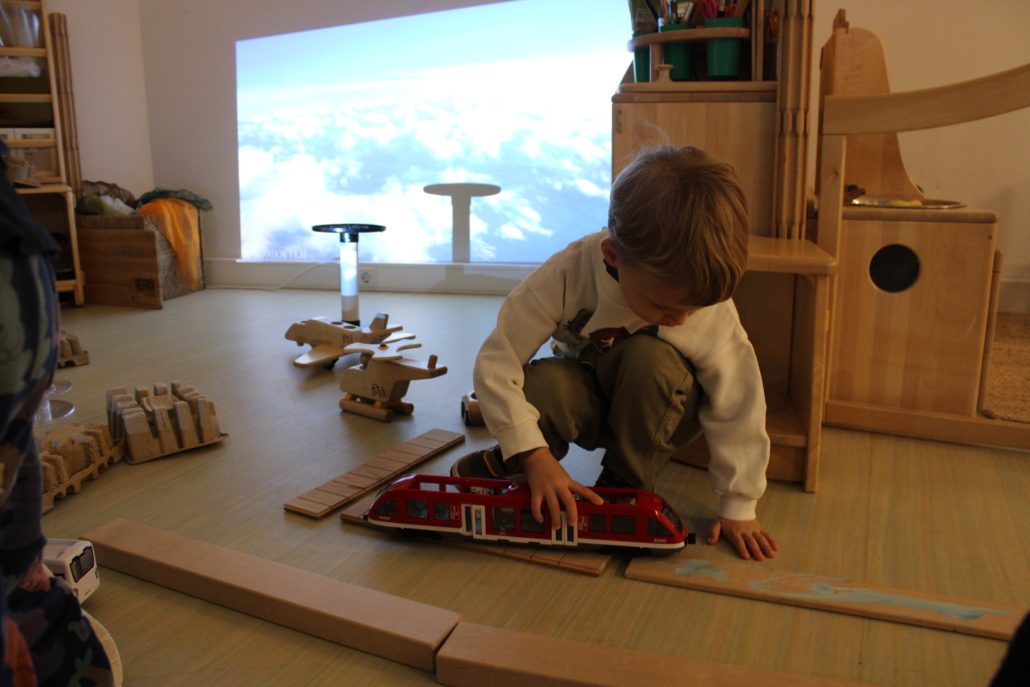
Students in Early Years also experiment with simple robots, investigate light and shadow, and engage with interactive experiences that encourage their curiosity and problem-solving abilities. These activities are designed to complement the Early Years themes of relationships, environment and play.
What connects these experiences is a shared focus on purposeful use. Technology is introduced with intention when it can deepen students’ learning, provide new opportunities for exploration or help students engage more fully with an idea.
Rather than encouraging passive consumption, Early Years educators aim to help students use technology as a tool for discovery, creativity and communication. Using technology itself is not the goal; it is one of many ways students are encouraged to explore the world around them.

