Developing Global Leaders Through Model United Nations
Earlier this year, ISA students travelled to The Hague to participate in the 58th annual THIMUN Conference, one of the world’s largest and most prestigious Model United Nations gatherings for High School students. Bringing together delegates from across the globe, the conference challenged students to debate complex international issues while representing a range of countries and perspectives.
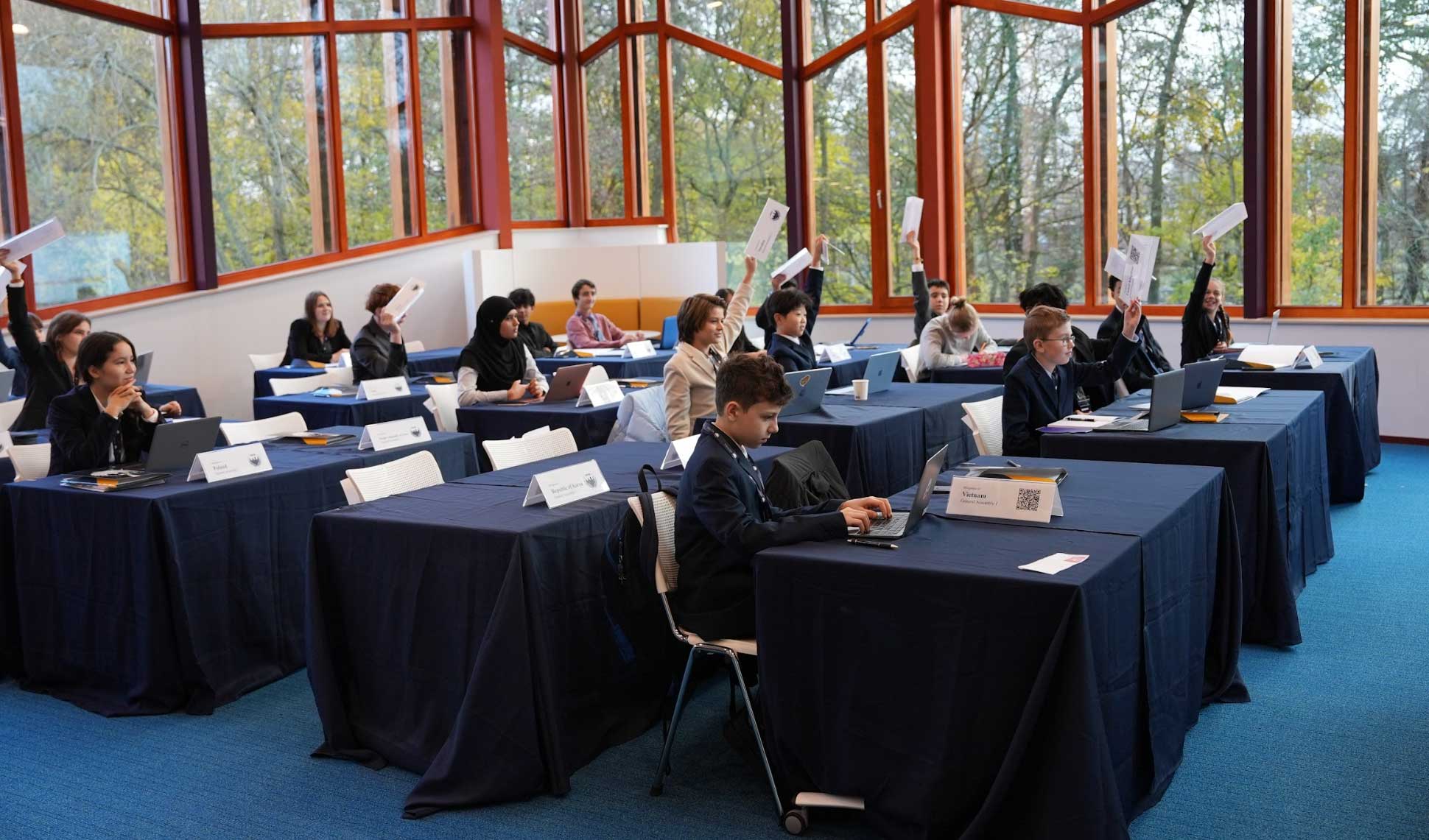
For many students, the experience marked an important moment of personal and leadership growth. Preparing for conferences requires students to research global challenges, draft resolutions and collaborate with peers to build consensus. Their success depended not only on strong arguments, but also on diplomacy, listening and the ability to understand viewpoints different from their own.
Model United Nations at ISA is a student-led programme, giving students responsibility both inside and outside the debate room. Weekly practices are organised collaboratively, and students take active roles chairing debates, mentoring peers and shaping the direction of the club.
“MUN is a great way for students to become leaders,” explains Greg, the programme advisor. “Even students without formal titles grow into leadership roles through participation, discussion and supporting others.”
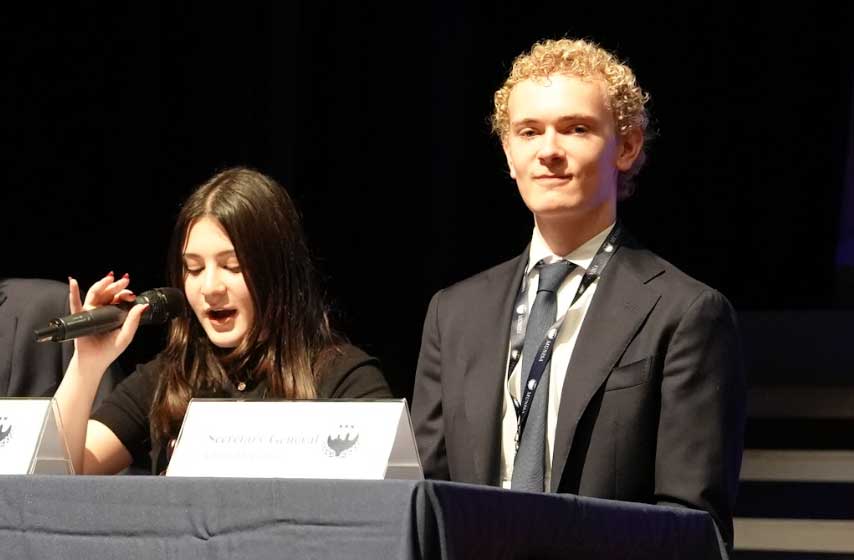
Growth is often visible over time. Students who begin quietly observing meetings frequently develop into confident speakers as they learn parliamentary procedure and practise presenting their ideas. Watching peers model effective communication helps students refine their own voice, building confidence that extends beyond MUN into academic and social settings.
ISA students also demonstrate leadership by organising their own conference, MUNISA. Planned over several months, the student-run event requires participants to communicate with other schools, coordinate logistics and manage promotion. This year’s conference, themed Diplomacy: Collectively Advancing Justice and Responsibility, reflects students’ commitment to engaging thoughtfully with global challenges.
Through roles such as conference organisers and communications leaders, students gain practical experience in collaboration, organisation and digital communication. These responsibilities allow them to see leadership as action, not position, shaped through initiative and accountability.
Experiences like THIMUN and MUNISA highlight how leadership develops through practice. Students learn to think critically, communicate with clarity and engage respectfully with complex issues, skills that reflect the IB Learner Profile attributes of being communicators and open-minded thinkers.
Through Model United Nations, ISA students discover that global leadership begins with curiosity, empathy and the willingness to listen. By stepping into unfamiliar perspectives and working toward shared solutions, they learn that meaningful change is built through collaboration, dialogue and understanding.

