Second London ISA Alumni Reception

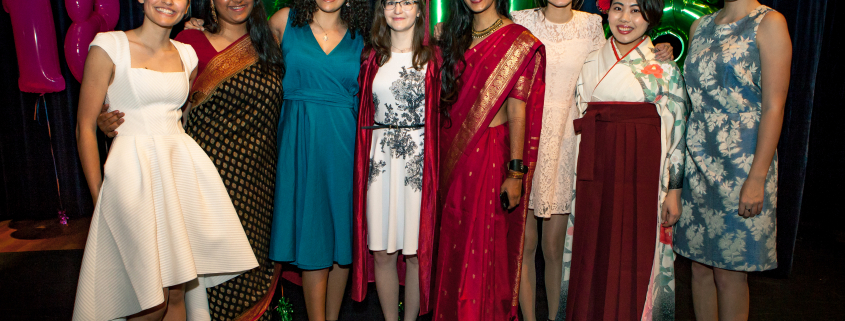
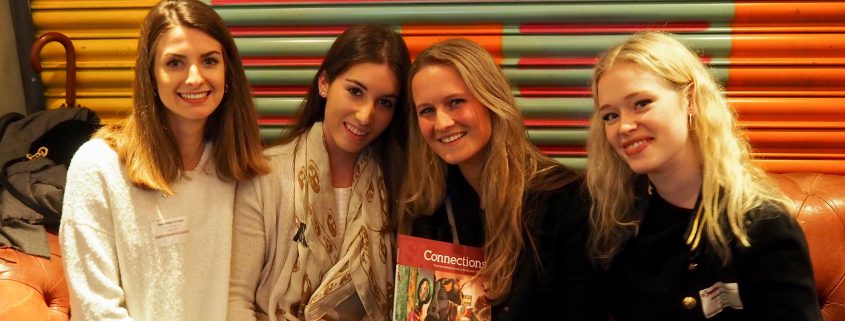
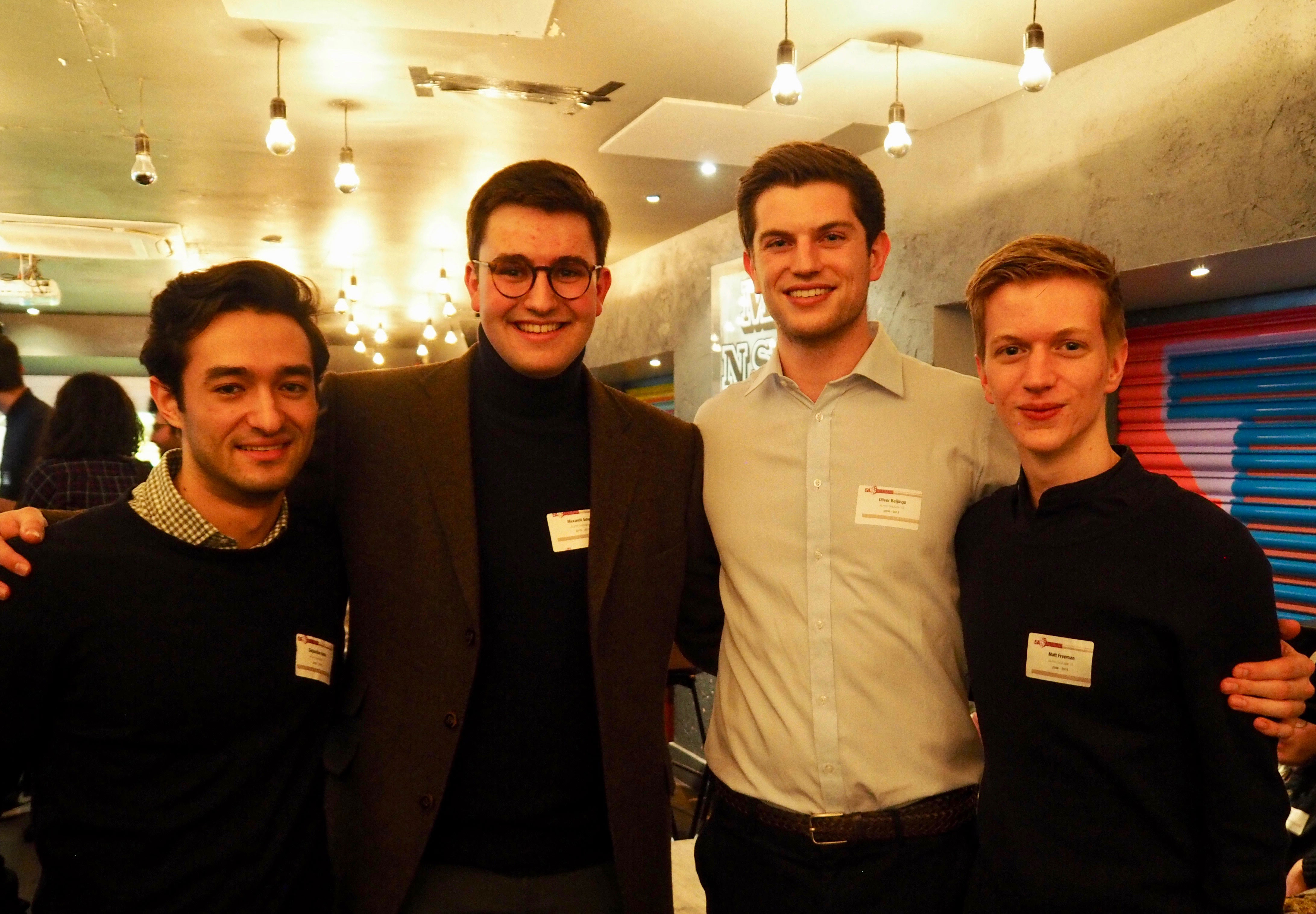
On Sunday, 21 January, ISA held its second alumni reception in London at the trendy Graphic Bar in Soho. The event connected ISA students, faculty and staff from the past five decades for an evening of fun and shared reminiscence of their time at the school.

There were around 40 attendees in total, 34 of which were alumni. These were mostly students who had attended ISA in the past 10 years, and it was especially exciting to have someone who attended from 1977-1985. Representing current ISA staff were Director Ed Greene, Admissions & Advancement Director Julia True and Alumni & Advancement Officer, Matt Jasinski. It was also a pleasure to see David Monk, the former Head of Upper School and Claire McQuillen, the former Assistant Head of Upper School, attend the event. 

ISA Alumni at our London Reception. Credit: Matt Jasinski

Receptions such as these provide a fantastic opportunity not only for old friends to catch up but for alumni to make new friends through their shared connection to the school. The next reunion will be held in New York on this coming Sunday, 4 February.

For Julia, who has worked at ISA for 20 years, the real pleasure of the reception was seeing how students had grown into successful young adults.

“What was lovely about the reception was spending time with these young adults in the height of their career. I saw them start ISA as children, so it has been an honour and a privilege to see them grow into adults. That’s what makes these events special.”

“It was also amazing to see the shared connection between students. They may not have known each other before because they attended school at different times, but there was still a common feeling between everybody who shared a connection through their time at ISA.”

For Matt, the London reception was a success and he is excited about the opportunities to host future networking events for alumni and current students.

“It was a great experience to return to London for our second ISA Alumni Reception. We were able to both catch-up with alumni who attended last year, as well as meet some new faces who were attending for the first time. I am really looking forward to hosting our first reception in New York City and know that it will be as fun as our London receptions have been.”

“In addition to expanding these receptions, we are continually thinking of ways to engage our Alumni Community with our current students. To this end, we are currently planning a career series for our grade 10 students. A number of alumni at the London reception expressed an interest in participating, as it would be a great chance for them to give back to ISA.”

If you would like more information about this or our other alumni offerings, please contact Matt at alumni@isa.nl.

Written by Megan Amelia

Author Colson Whitehead Visits ISA

On 6 December, Colson Whitehead, author of Pulitzer-prizewinning novel The Underground Railroad, visited ISA for a Q&A session with the grade 12 Theory of Knowledge class. Recently, the students have been discussing art as a form of knowledge. The session was a unique opportunity for students to meet an artist and consider his role in the process of creating the artwork.

Sofia presents Colson Whitehead with her artwork.

The Underground Railroad tells the story of Cora, an escaped slave from a plantation in Georgia, who makes a bid for freedom by following the Underground Railroad, which is represented in the novel is an actual subway system. While he didn’t intend the book to have a didactic message, Colson explained that he depicted brutal violence inflicted on slaves because he felt a responsibility to portray the cruel treatment of his ancestors. 

One student raised the issue of slave auctions today and asked if there were any lessons that the book can teach us. Taking a realist view, Colson answered that the book was by no means a manual. According to Colson, we will always have literal slaves and people who live slave-like experiences under capitalism, as they are trapped in an economic system which oppresses the poor. This, he said, will continue “until we’re robots on Mars.”

Grade 12 student Sofia was inspired by her experience of reading the novel to create her own piece of artwork; a drawing of Cora, peering at the outside world from the attic through a small hole. Sofia was invited up to the front of the discussion and presented the drawing to Colson; she felt that, as he was her inspiration, he deserved the original piece.

Written by Megan Amelia

Hispanic Community Fundraising

Following the earthquake in Mexico in September, ISA’s Hispanic community came together to raise funds to help those affected by the disaster.

A key aspect of the fundraising efforts was the Hispanic Community Solidarity Breakfast held on November 1st. The breakfast was kindly supported by the Mexican embassy, who loaned the decorations and sent their representative, Mr Jorge Delgado Sumano, to speak at the event. The breakfast was a great success, selling over 220 tickets and attracting a large crowd.

The Hispanic Community Solidarity Breakfast. Credit: Olga Bolhuis.

Both the Upper School and the Lower School held bake sales to raise funds. Staff, parents and students across the school worked tremendously hard to make these sales a success. The Upper School bake sale alone raised €548.35, a fantastic achievement that the students can be proud of.

As a result of the combined efforts of the solidarity breakfast, the upper and lower school bake sales and personal donations, the Hispanic community raised a fantastic total of €3834.65.

The funds will go directly to UNICEF Mexico, an organisation who specialise in relief efforts for children and families in the hardest hit regions of disaster, providing them with life-saving resources. This is a fantastic example of how our ISA community can come together to do something truly amazing.

Some of the ISA community. Credit: Olga Bolhuis.


Written by Megan Amelia

International Community Coffee Mornings

A Meet and Greet with Jean Kwok, author of Girl in Translation

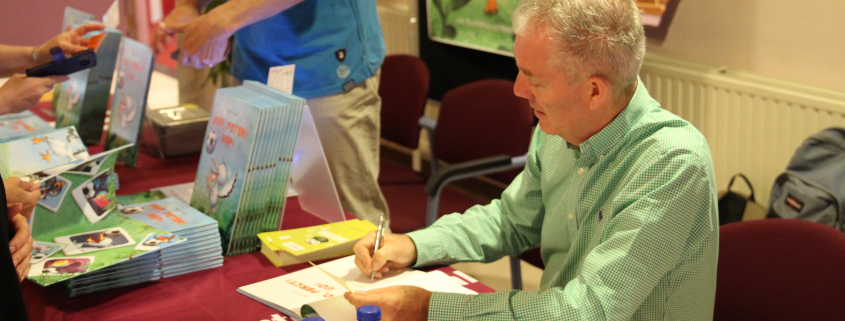
Yesterday, bestselling author Jean Kwok visited ISA for a meet and greet session with grades 10, 11 and 12. It was a wonderful opportunity for a few of the ISA Upper School students, some of whom are studying Jean’s internationally successful novel Girl in Translation as part of their English B course, to ask in-depth questions about the book and the author’s life.

Jean Kwok visits ISA.

As a follow up to the formal meet and greet sessions, four students were given the opportunity to attend a small, intimate lunch with Jean as a reward for their hard work and to ask her questions about her twin passions–writing and dancing. Having all danced from a young age, three of the students discovered that Jean shared their passion and gained insight from her about the competitive nature of professional ballroom dancing.

For most ISA students, Jean is a highly relatable figure. A Chinese immigrant to the US at the age of five, Jean left behind everything she knew at home and arrived into a whole new world, with an alien language and culture. Not only did the students have a chance to learn more for their coursework, but they also received some powerful and inspiring life advice from Jean.

Jean began by telling the story of her own life and the extent to which Girl in Translation is based on reality. She discussed her experience as an impoverished immigrant in the US, where her entire family worked in a clothing factory for as little as 1c per piece of clothing they produced. She described feeling ‘all wrong’, with her handmade clothes and short hair, which left her feeling isolated and an outsider to American culture. This is reflected in her protagonist Kim’s own feelings in the novel.

The picture of squalor Jean paints in her book, including the apartment ‘from hell’, filled with roaches and rats, where Kim and her mother have to ‘seal the windows in the kitchen with garbage bags’ for ‘a bit more protection from the elements’ is absolutely true to life, Jean explained.

Before meeting Jean, it might have been easy  for the students to dismiss Jean’s experiences as unique or rare, or to argue that times have changed since her childhood. However, with an estimated 170 million children across the globe still engaged in child labour, with many of these employed in the clothing supply chain, Jean’s emphasis that ‘this can and does happen’ certainly remains pertinent today. She explained that her work is for people without a voice; for the working-class people who don’t have their stories told.

What was really striking about Jean’s talk was her passion and enthusiasm, not just for writing, but also simply for life. Jean argued that while hard work itself is not fun, the deepest happiness comes from the knowledge that you are fulfilling what you were meant to do, to the best that you can do it. Everybody fails at things, she said, but success comes from resilience; successful people are the ones who get back up again. Her most powerful advice to the students: you’re the only one who can give up on yourself.


Further Reading

To find out more about Jean, you can visit her website: http://www.jeankwok.com/

https://labs.theguardian.com/unicef-child-labour/

http://www.ilo.org/wcmsp5/groups/public/—ed_norm/—ipec/documents/publication/wcms_221513.pdf


Written by Megan Amelia

Grade 9 Students Visit Kamp Westerbork Memorial Centre

On Thursday 12th October, 2017, Grade 9 travelled to the Kamp Westerbork Memorial Centre, in the province of Drenthe. From 1942 to 1944, Westerbork served as a transit camp for Dutch Jews before they were deported to killing centres in German-occupied Poland. As such, this is a highly significant historical site. Students were given a tour of the site of the former camp by experienced educators and also watched a film which showed rare footage of Dutch Jews leaving Westerbork for Auschwitz.

This visit gave our students a valuable opportunity to gain understanding of the Statement of Inquiry for our current unit ‘Global conflagration in the twentieth century’: ‘When leaders seek power through the choice of isolation and discrimination, this can often lead to significant levels of change and global conflict.’ This visit deepened our understanding of how certain conditions in society may lead to the rise of extreme consequences.

Below are reflections of some of our students, who share the programme for the day and what they learnt about the concepts of isolation, change and choice:

During the Westerbork trip, we walked along the long trail all the way to the camp itself- in a way creating a feeling as if we were the prisoners making the journey, because it was all very isolated and it was a long way there. We listened as a guide walked us through the different parts of the camp and monuments and explained the story behind everything. From this trip, I learned that the Nazis made Westerbork a ‘safer’ place to keep the Jews in comparison to the main concentration camps and Ghettos, because they wanted the Jews to trust that the place that they were going to by train was going to be similar. They held sporting activities, provided entertainment and even had a hospital where they took care of the sick.

After we were done with the tour and had seen the very end of the railroad tracks that are now cut off, we started our walk back. We then saw an image of the whole camp, that was taken at the time of its use, from the same spot we were then standing in and it created an emotional and impactful image in my mind: everything really had occurred here once, and we were standing right on it.  – Elena Chova Badia

We learned why and how Westerbork was used: the role of the camp in the Second World War. It was deliberately placed far away from civilisation to distance the Jews and gypsies from the so-called “pure” nation.  Two memorable moments of the trip were seeing the stone and the railway memorials. The stone memorial was made up of many red blocks in the ground, each with either a Jewish star, flame, or nothing on top. The Jewish stars symbolise the Jews brought to the camp, the flame the gypsies, and the blank stones the ones who resisted. It is a tribute to all who died. The railway symbolised all the train wagons taking Jewish children, women and men to death camps. These were memorable because they were very powerful in their symbolism. – Emma Keerberg


I learned that around 100,000 Jews were sent to their deaths from the Westerbork transit camp. I also learned that Anne Frank was imprisoned there at one point and that, strangely, Camp Westerbork wasn’t even the worst of places. Jews were treated decently here but then usually gassed immediately after they arrived at their death camps. A memorable moment was the train which was there. It was calling out all the names of the people who were there and it gave me goosebumps because of how young some of the people were. One story I found interesting was the one about the baby who got very good care, which was most likely expensive, at Westerbork but after being treated well by the German camp commandant was then transported to a death camp and killed. Lastly, the long trip there gave me a sense of how isolated they must have felt for the short period they were there. – Olivier Van Oijen


Article by:  Joanne Gogelescu, ISA Individuals and Societies Faculty

Many hands contribute to a great afternoon at Ghana charity concert

ISA hosted the 3rd annual Ghana charity concert on Saturday 20 May, featuring the local Ghanaian choir, Inspirational Voices, and various musical groups from the Lower School. The concert has become a popular feature on the ISA calendar and raises funds for the Nunya Academy in Ghana.

Organised by ISA Music teacher, Fabian Galli, the event also featured Kofi Gbolonyo, who has long been involved with ISA and has been instrumental in the creation of this fundraising initiative. Mr Gbolonyo was able to spend some time at the school to join in the music classes, share stories from the Ghanaian culture and perform in the concert as well.

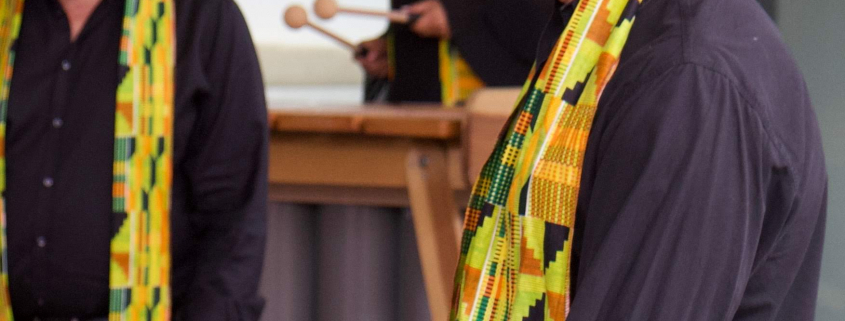
A traditional Ghanaian (Ewe) proverb says, “Knowledge is like a baobab tree, one person’s hands cannot embrace it” and this was well and truly reflected in the many hands that contributed to a fantastic performance. It was a fabulous display of colour, music and dazzling dance from all involved, including the Lower School choir, the Kufara Marimba Group, Junior and Lower School percussion groups, and Marimba Mania, a performing group comprised of ISA parents and staff.

The event raised €4.435 for the Nunya Academy which will go towards continuing the building work that commenced in 2015, through funds raised by previous years’ concerts. The 2015 concert was featured in our Connections magazine. Since that time, ISA has continued to host events that help Mr Gbolonyo in his quest to build a music academy in his home community of Dzodze, Ghana. At its conclusion, Mr Gbolonyo extended his gratitude to all who were involved in making this year’s Ghana charity concert a very memorable one.

“I never expected such a high quality and high level of musical and performance expertise and skills from the students. The enthusiasm and dedication from the students, parent volunteers and teachers to the whole process: from the preparations to the final show far exceeded my expectations.”

Congratulations to all the students who performed and to Fabian, Aideen Nolan and Judy O’Callaghan, and the fantastic parents volunteers who gave their time to help make this event a great success.